
On 26 February 2026, the Climate-Smart Destination Marketing and Visitor Communication training was held online within the framework of the NaTour4CChange project. The session introduced the project’s new Manual on Destination Marketing and Communication for Climate Action, developed to support pilot destinations in designing effective marketing and communication strategies that integrate climate action into tourism management.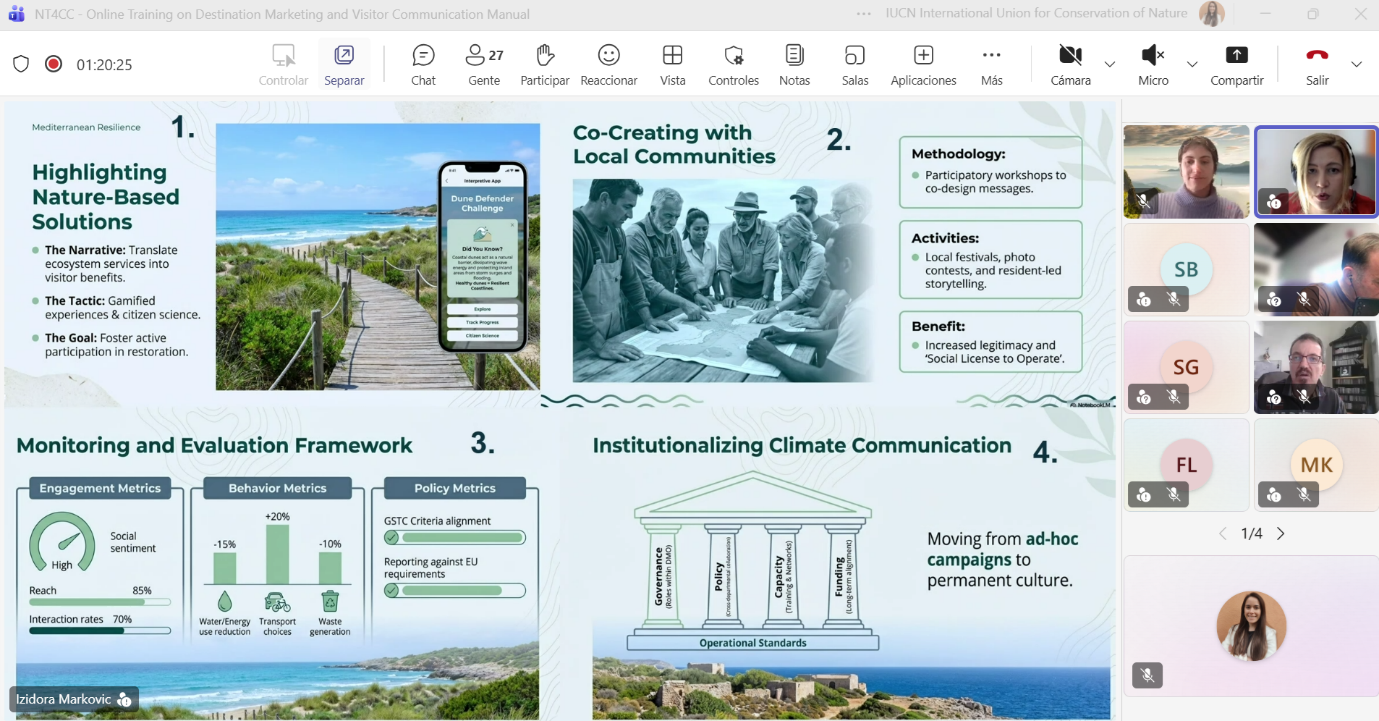
The training opened with contributions from IUCN MED and experts from the Institute for Tourism, who presented the objectives of the manual and its role in helping destinations move beyond traditional promotion. Climate-smart marketing encourages destinations to communicate climate action as a shared responsibility and an opportunity, combining urgency with solution-oriented storytelling. Transparent and inclusive narratives that reflect real actions (rather than vague sustainability claims) are essential for building trust with visitors and local stakeholders.
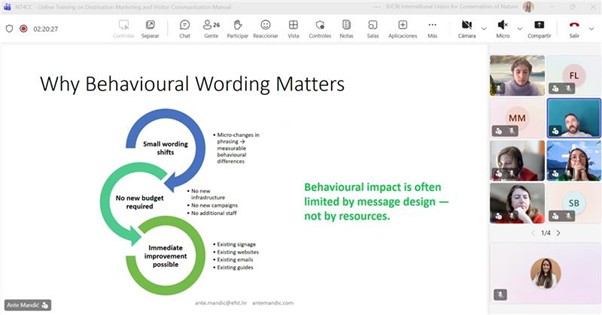
The session had a strong focus on the role of behavioural science in tourism communication. The discussion highlighted how visitors often prioritise enjoyment and convenience while travelling, meaning that awareness alone rarely leads to sustainable choices. Instead, destinations can encourage responsible behaviour by making it easy, attractive and visible, using nudges and clear guidance at key moments of the visitor journey, from trip planning to on-site experiences.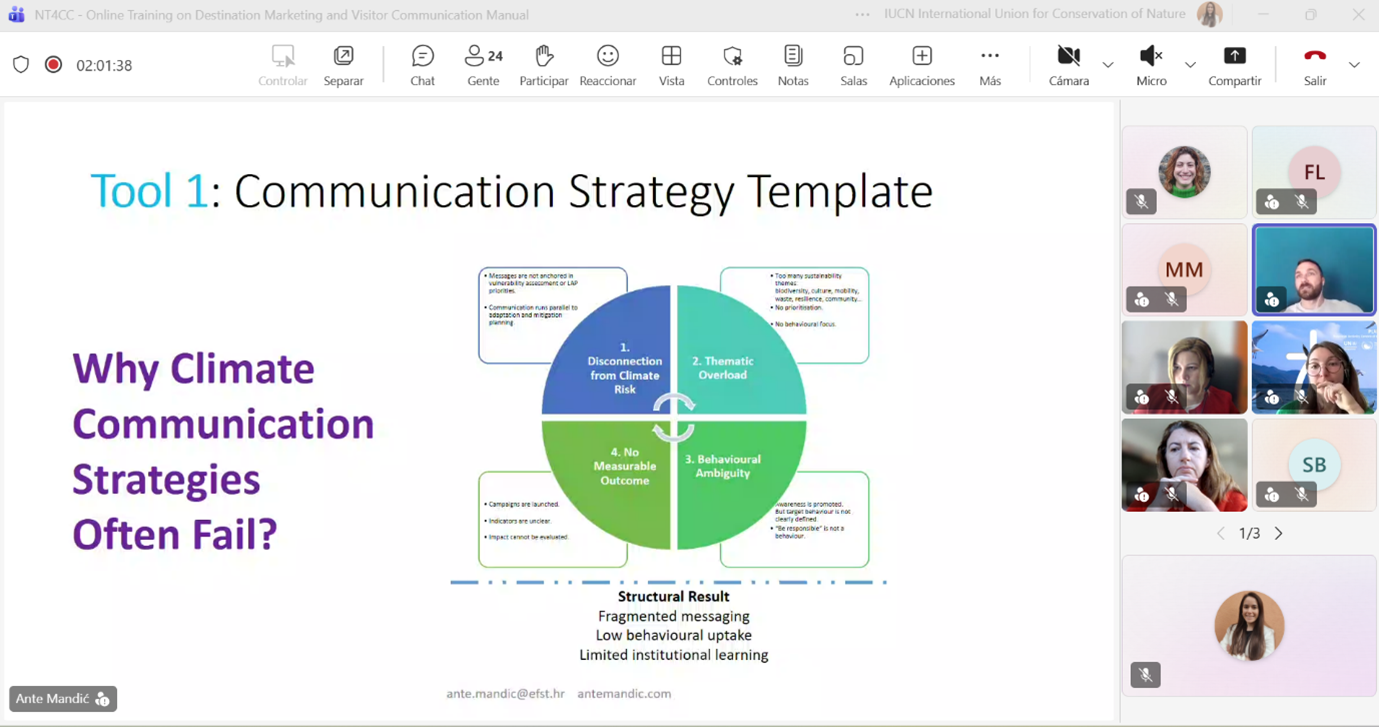
Through breakout discussions, pilot destinations reflected on key climate challenges affecting their areas, such as coastal erosion, heatwaves, water scarcity and Posidonia management, as well as the difficulties of communicating complex environmental issues to visitors.
The session concluded with the presentation of a practical communication toolkit, which will help destinations translate strategy into action. In the coming months, pilot destinations will begin drafting their Climate-Smart Destination Marketing and Visitor Communication Strategies, with further support through bilateral consultations, technical review and a dedicated workshop in Villasimius on 15 April.