
The NaTour4CChange Project marked a significant milestone with its 3rd Pilot Destinations Exchange Workshop and in person consortium meeting held from 15-17 of April. The event was co-organised by IUCN Med and hosted by the Municipality of Villasimius Marine Protected Area of Capo Carbonara, one of the project’s pilot destinations and the Autonomous Region of Sardinia. The event took place at the Casa Todde Museo del Mare “Giorgio Capai”. Over the three-day workshop, representatives from the 7 Mediterranean coastal destinations and the 10 project partners came together to collaborate, exchange knowledge and co-develop 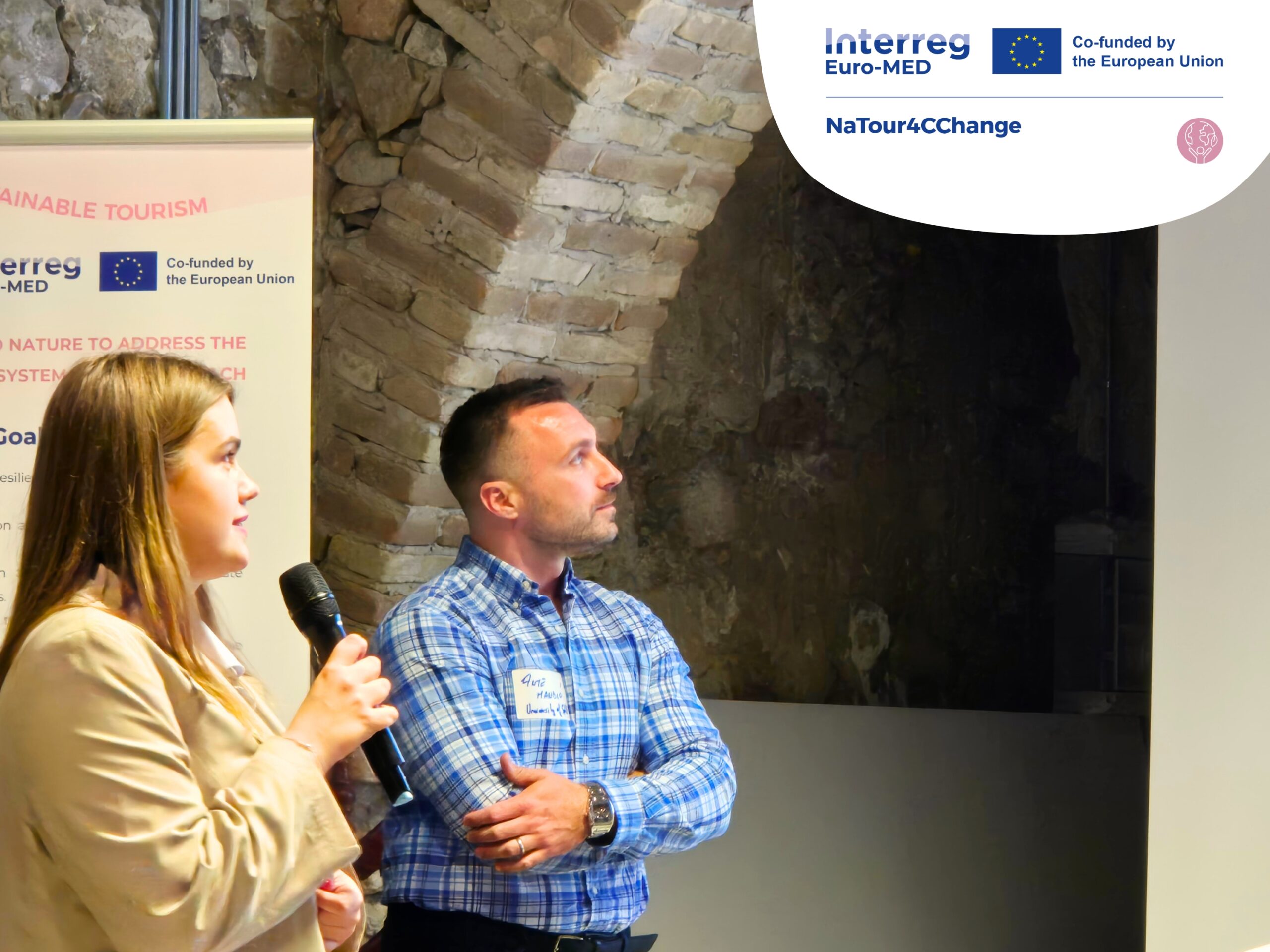 practical solutions to climate challenges.
The event began with a press conference in Cagliari organized by Autonomous Region of Sardinia, where Regional Councilors Rosanna Laconi (Department of Environmental Protection) and Franco Cuccuredu (Department of Tourism) underlined the value of connecting scientific knowledge, policymaking and local economic stakeholders to strengthen coastal resilience (Read more here: https://natour4cchange.interreg-euro-med.eu/2026/04/16/nt4cc-press-conference-sardinia/).
Indeed, one of the main objectives of the project is to foster cooperation among tourism, environment/conservation departments and other relevant tourism stakeholders through the creation of the Regional Coordination Units (RCU), an ad-hoc governance structure monitoring the implementation of the regional tourism climate strategies.
The first day in Villasimius focused on building a shared framework for Nature-based Solutions (NbS) financing and communications, with expert guidance from IUCN Med, led by Irene Morell Rodríguez (NBSCLIMATE) on financial and business models for NbS, and Ante Mandić (University of Split and IUCN WCPA TAPAS) on improving visitor communication and aligning sustainability efforts with tourism communication strategies.
Particular attention was given to the development of feasibility assessments and business models for NbS. Several financial mechanisms were discussed to ensure the long-term viability of NbS, including:
- Sustainable tourism contributions (ecotaxes), supporting environmental conservation (i.e. Balearic Islands)
- Public-private partnerships (PPP) for co-investment in specific infrastructure
- Destination certification schemes generating revenue for NbS (i.e. “Esprit Parc National” in France)
- Payments for ecosystem services (PES) (i.e. hotel paying for beach protection, foreseen in the EU Nature Restoration Regulation)
- Revolving conservation funds: Self-replenishing loan cycles to multiply the seed capital.
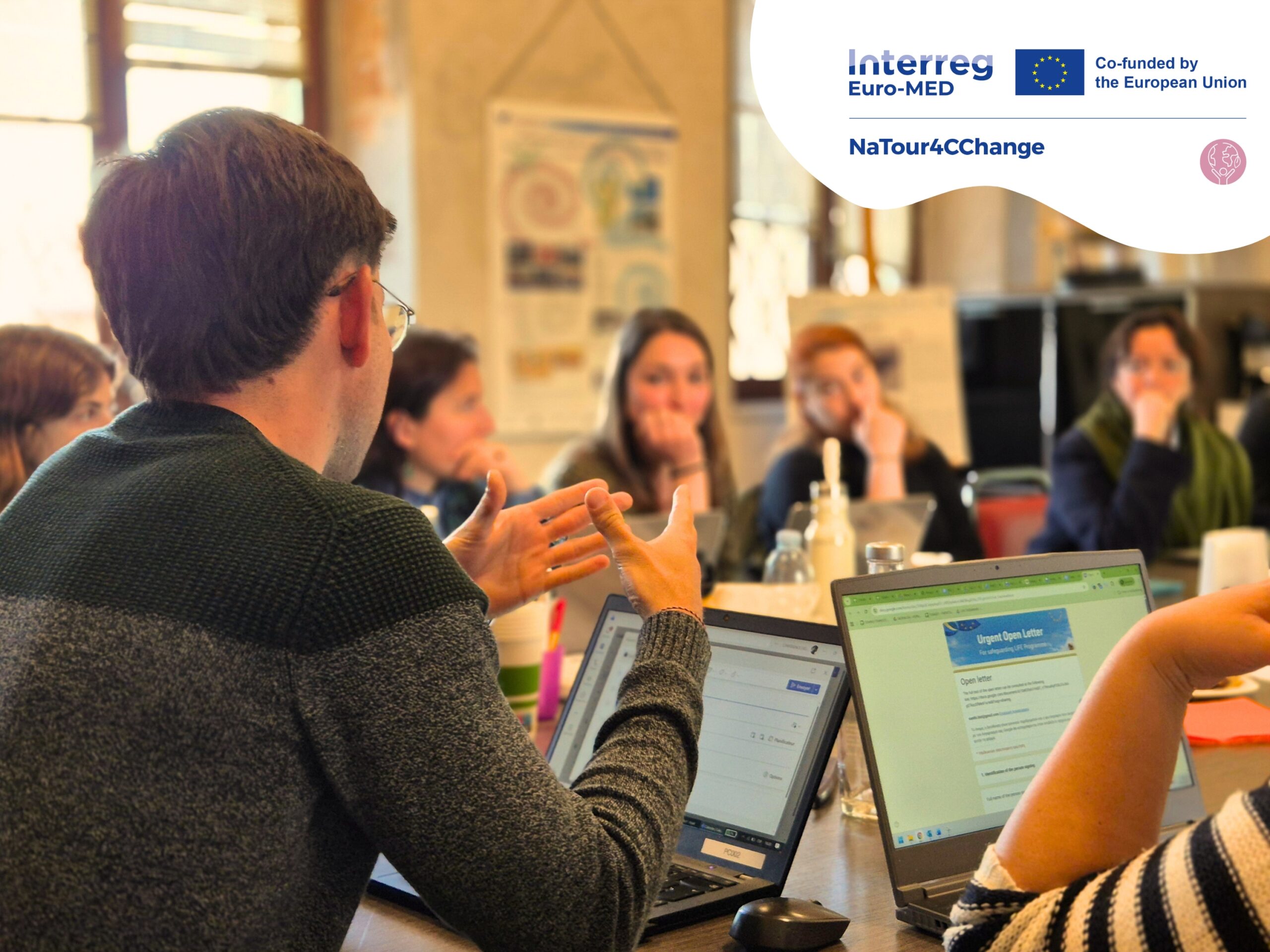 The work on communication emphasised the importance of aligning communication with NbS objectives and influencing visitor behaviour. Methodologies discussed included:
- Mapping the tourist journey (before, during, after the visit)
- Defining target audiences and desired behaviours
- Integrating online and on-site communication channels
- Linking NbS implementation with clear messaging and action plans
Additionally, pilot destinations explored concrete applications to address challenges such as coastal erosion, drought, and habitat degradation, while promoting behavioural change among visitors, including respect for dune ecosystems, acceptance of natural beach dynamics, and more sustainable water consumption practices. The exchange demonstrated the strong potential of Nature-based Solutions to enhance climate resilience while supporting a more sustainable and environmentally responsible tourism model across Mediterranean coastal destinations.