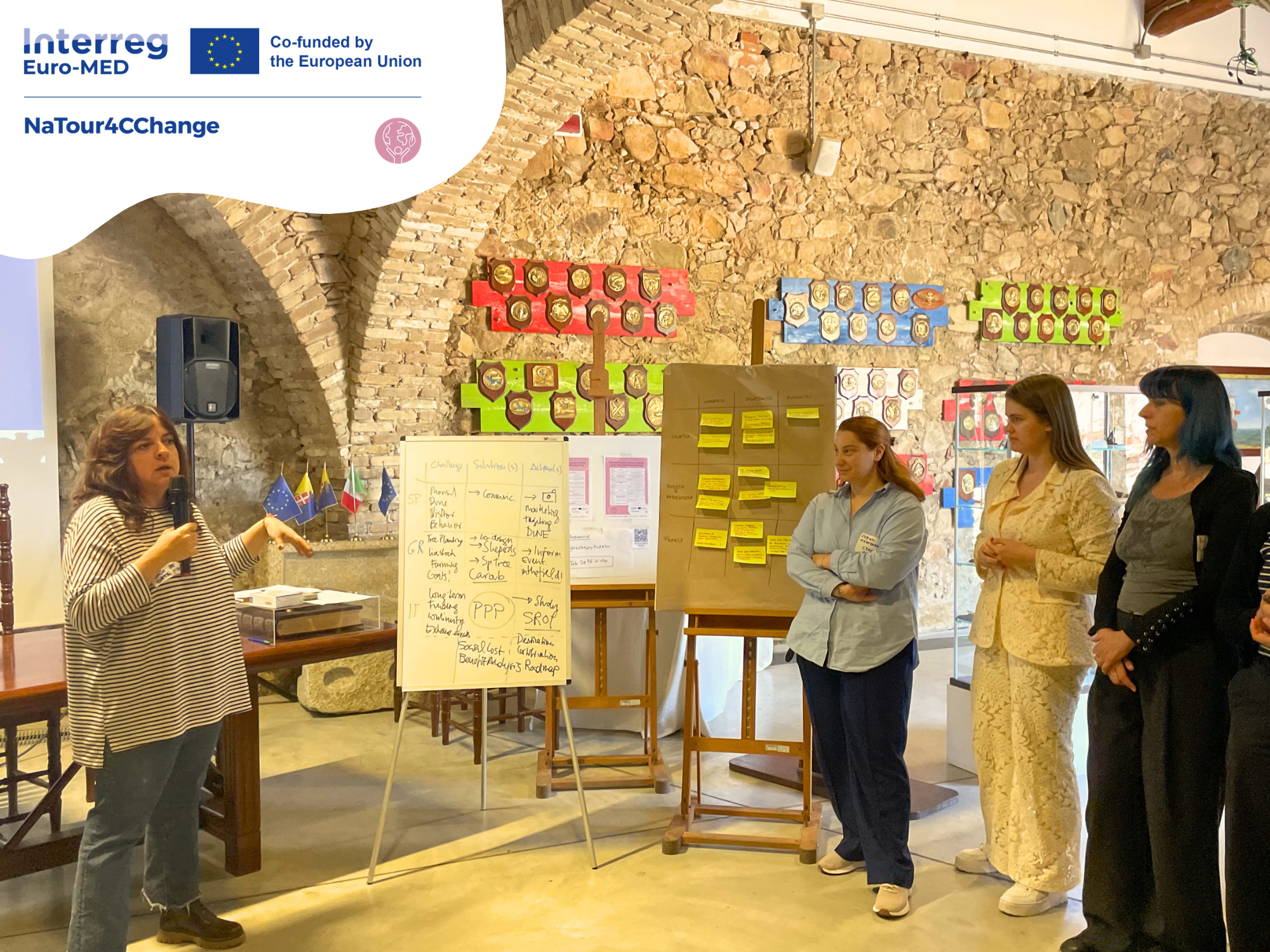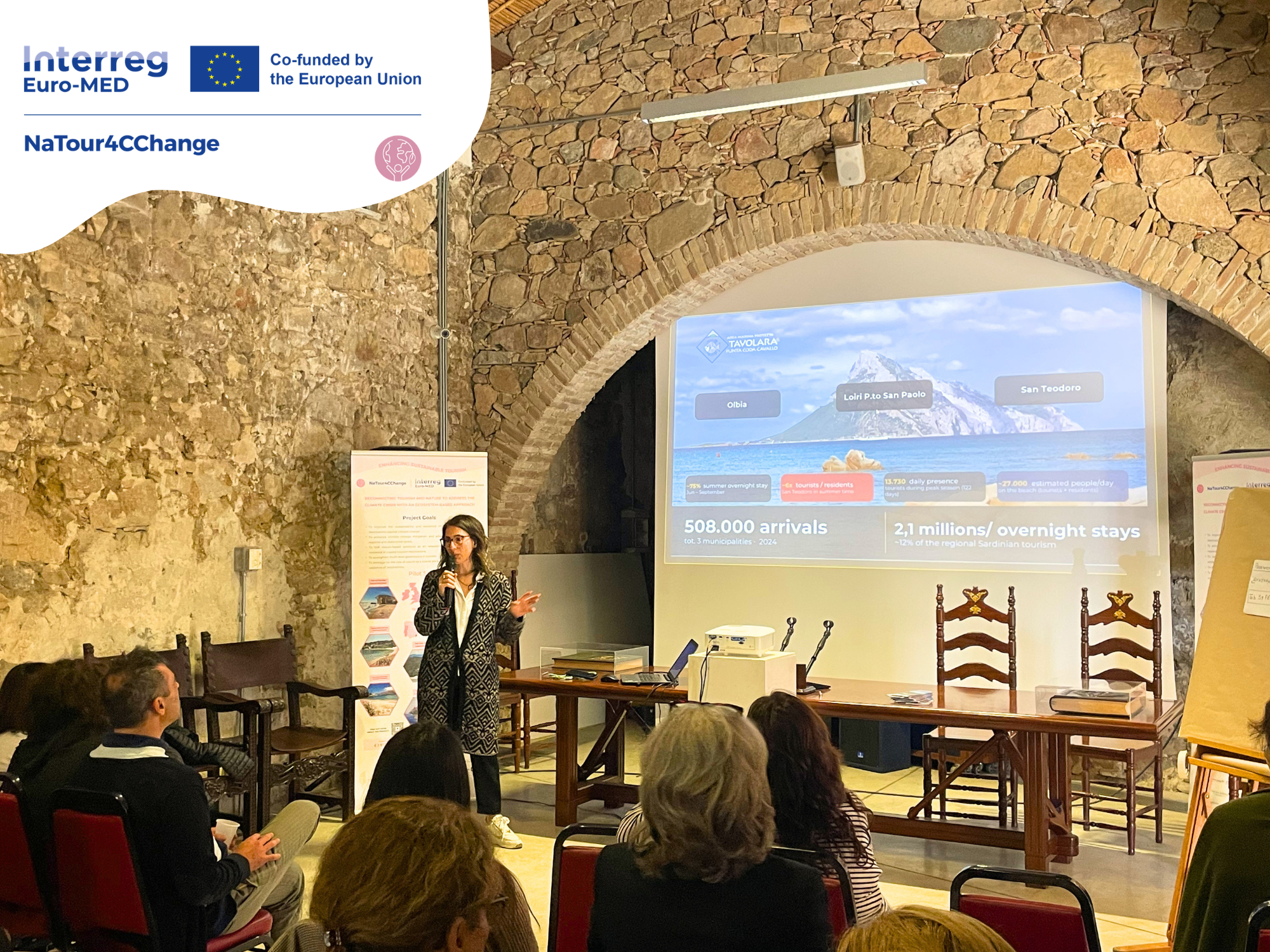

 Co-organised by IUCN Med and hosted by the Municipality of Villasimius Marine Protected Area of Capo Carbonara the 3rd Pilot Destinations Exchange Workshop and in person consortium meeting was held from 15 -17 of April (Read more on the first day here).
On the second day, each of the seven pilot destinations of the NaTour4CChange project presented progress on the design and implementation of their Flagship NbS initiatives:
| Protected Area | Flagship NbS |
| Cap Ferrat (Région Sud, France) | Conservation and restoration of Posidonia meadows; mitigation of coastal erosion within protected area boundaries. |
| Dugi Otok (Neretva Canton, Croatia) | Removable walkways, Posidonia restoration. |
| Cabo de Gata Níjar (Andalucía, Spain) | Dune restoration, sustainable mobility. |
| Villasimius (Sardinia, Italy) | Dune restoration, community economic diversification. |
| Zakros – Koufonisi, Sitia Geopark (Crete, Greece) | Dune restoration, Geo-trail management, guide certification. |
| Hutovo Blato (Bosnia & Herzegovina) | Bird-watching infrastructure. |
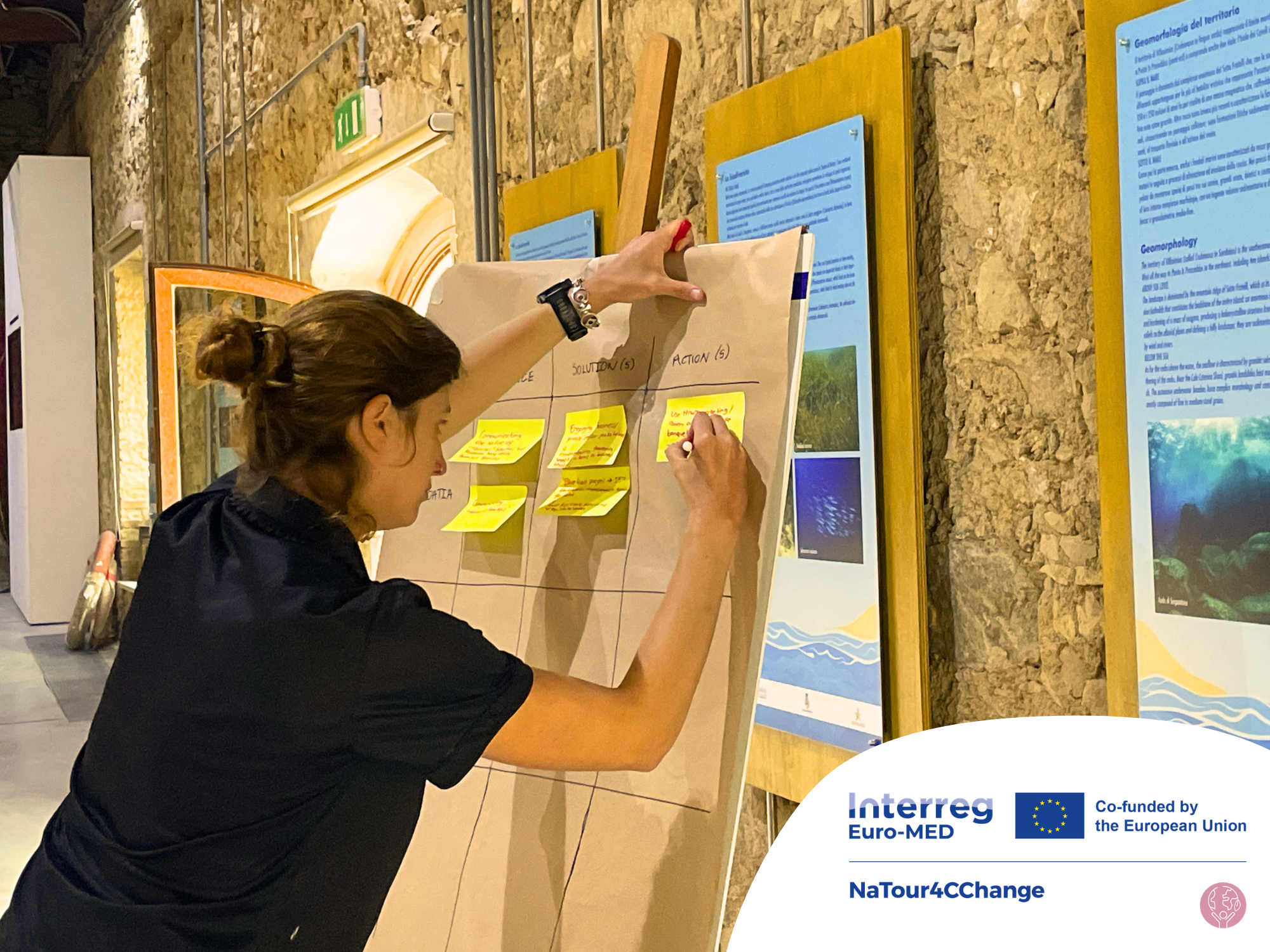
To complement the experience being built through the NaTour4CChange project, external experts were invited to the session to share insights from other real-world case studies and projects working on NbS. From NbS in the Nitrate Vulnerable Zone of Arborea to strategies to enhance urban climate resilience in the Interreg Euro-MED Cool Noons project, along with climate adaptation initiatives by MEDSEA and the fieldwork of DesirMED, these diverse contributions provided practical inspiration and enriched the discussion. Furthermore, through “Case Clinics,” destinations were divided into two groups where project partners and external experts provided peer-to-peer support by sharing inputs, ideas, and solutions to the challenges related to design, feasibility and communication of each destination’s selected NbS. Each pilot destination presented one key challenge they are currently facing, what has been done so far to address it, and what type of support they are seeking from peers. Several key challenges emerged from these discussions including the difficulty of securing buy‑in and sustained support from local actors such as tourism operators, visitors, and political stakeholders, alongside more technical barriers related to capacity and access to the knowledge needed to guide restoration efforts. Through open and collaborative exchanges, where participants shared concrete examples, practical ideas, and potential contacts, each pilot was able to identify clear, actionable next steps to address their concrete challenges.